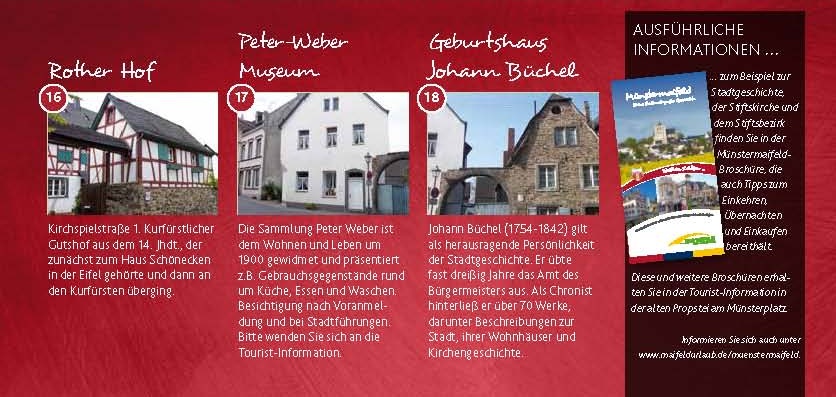

City- and church leadership
Münstermaifeld is a small but old town in district Mayen-Koblenz, situated most beautifully on elevated ground, only a few kilometers from the River Mosel and the famous castle Eltz. Next bigger towns are Mayen in the Eifel and Koblenz with its “Deutsches Eck” (German Corner) where Mosel flows into Rhine.
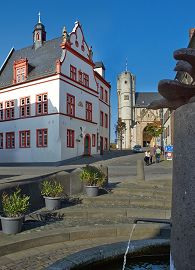 Any person who approaches our landscape “ Maifeld” is impressed by the old church that looms over the whole region. Especially in spring, when fields are shimmering golden, the silhouette of the collegiate church in Münstermaifeld provides a picturesque image in the eyes.
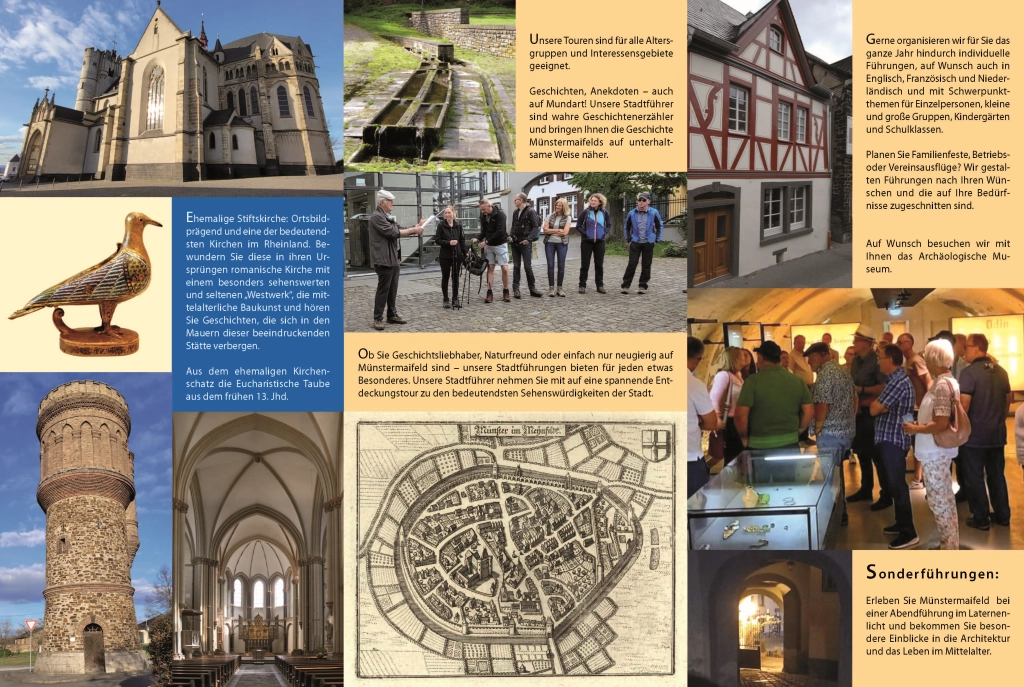
The city, which bears the name of the landscape, is worth to be explored with competent guides who explain to guests the varied and more than 1400 years of history. First residents of our region were the Celts, afterwards came the Romans and Franks (Charlemagne). In Middle Ages (1277) Münstermaifeld received town privileges, wherefore it is one of the oldest towns in Rhineland-Palatinate and with the 3.700 citizens even one of the smallest.
The original Romanesque cathedral – over the centuries a diverse mix of architectural styles were added – with its impressive size, its valuable organ and its Antwerp gold altar from the late Gothic period is a gem of art history. Wall paintings from the early days of the church came to light during restoration work and give the interior of the nave a lively charme.
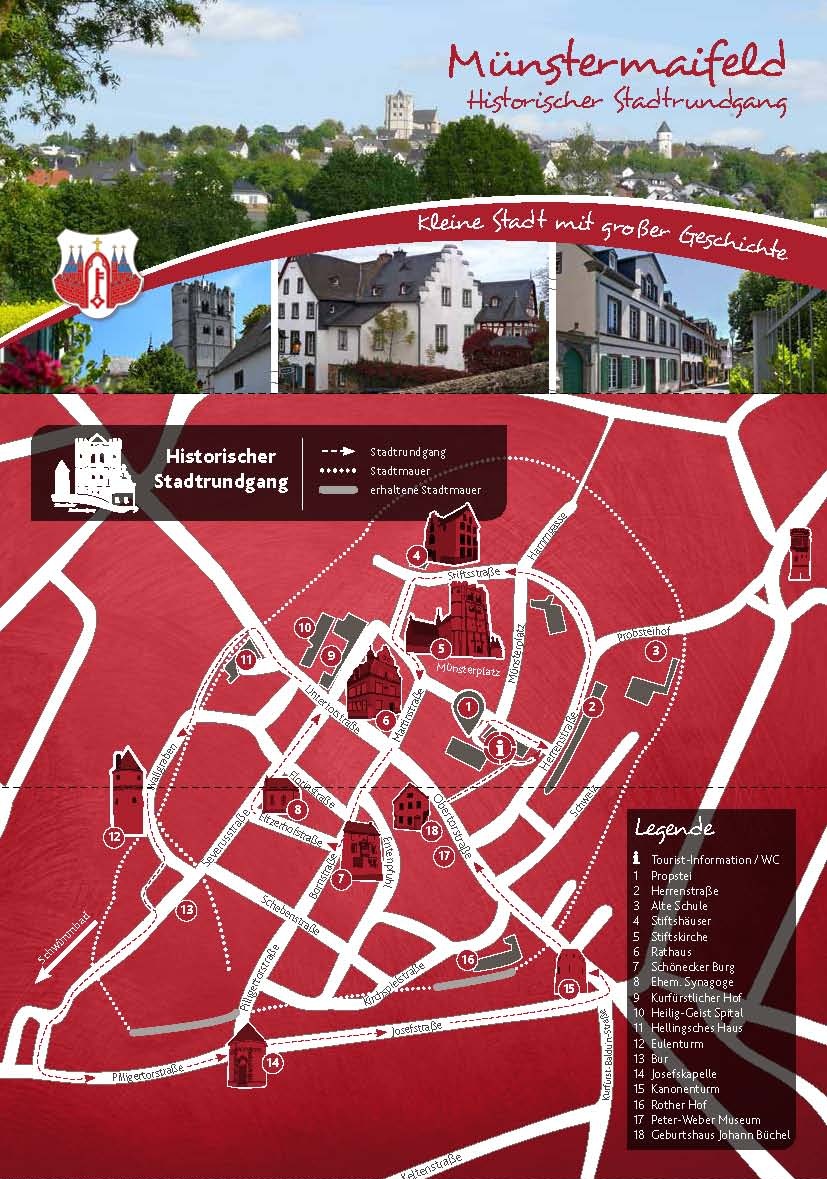
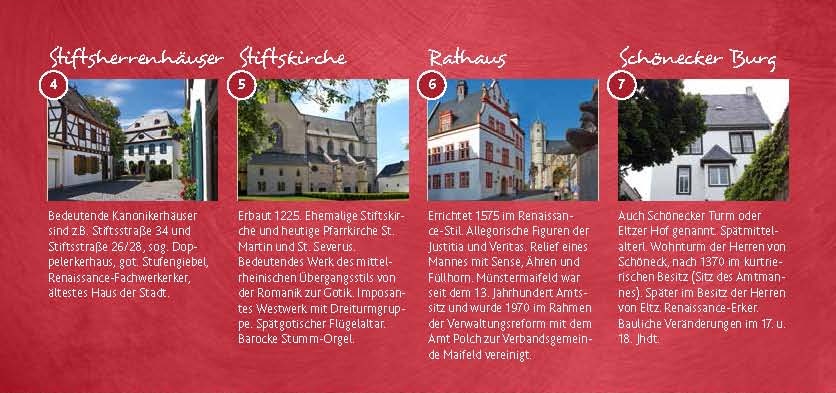
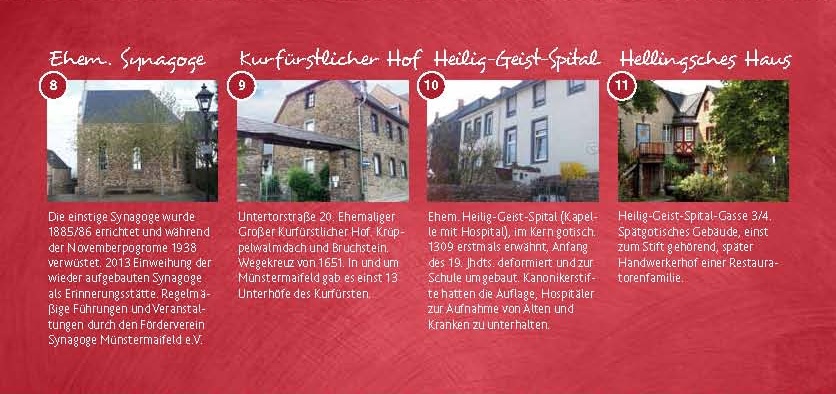
 While walking through our medieval town centre with its winding streets you can admire the classicistic mansions that surround the market place, the half-timbered facades and remains of the city wall. These all contributes to the comfortable lifestyle that characterizes this interesting town.
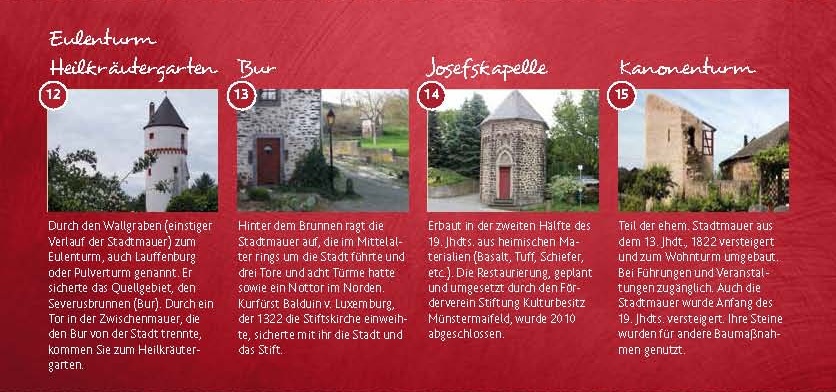
The ancient well, where laundry was washed in the Middle Ages, livestock watering happened and water was got, the Eulenturm (owl tower) belonging to the city’s fortifications and the playful-looking water tower also tell of former times.
At the same time the city, with a modern swimming pool and different gastronomic offers, is a point of contact to guests from all over the surrounding countryside.
Are you interested to see and learn more about Münstermaifeld and its long lasting history?
Do not hesitate to get in contact with our point of contact for guided tours:
Contact
Moday - Friday:
9:00AM - 12:00AM
Telefon: +49 (0) 2605 - 47 07
Fax: +49 (0) 2605 - 95 26 95
eMail
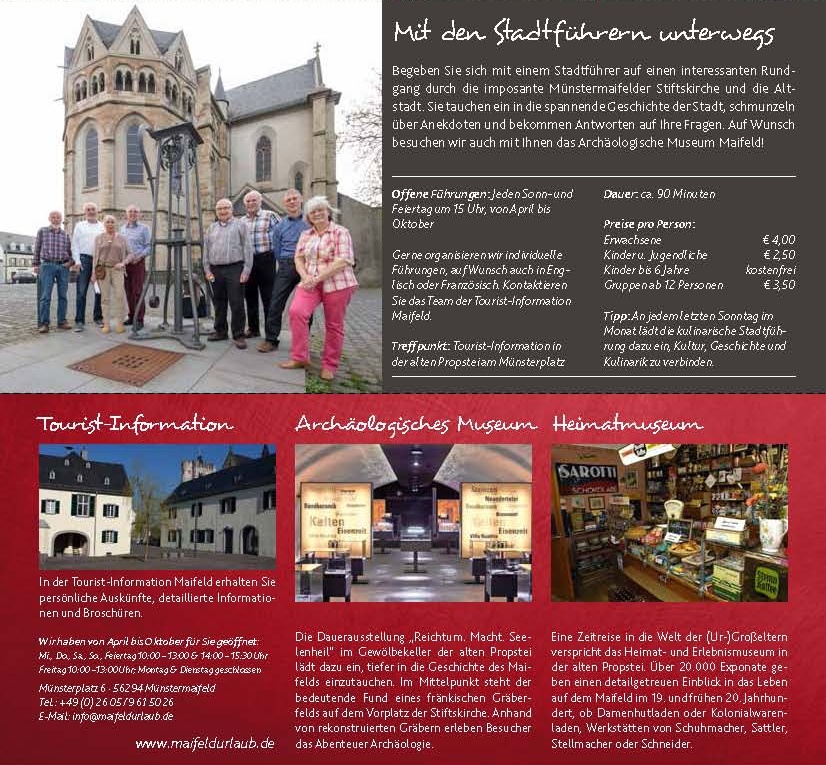
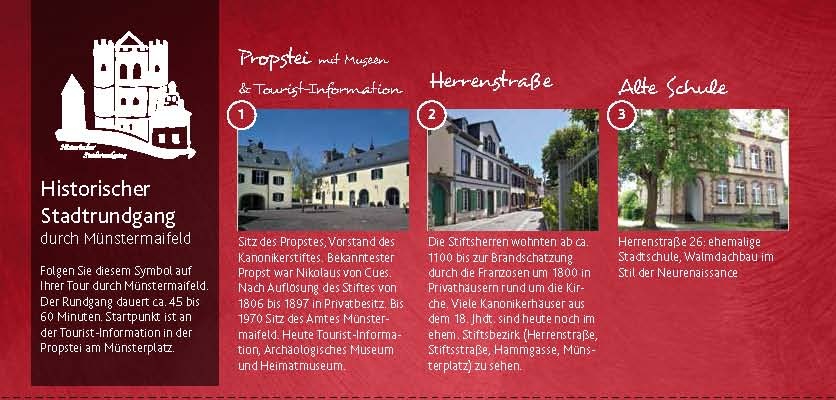
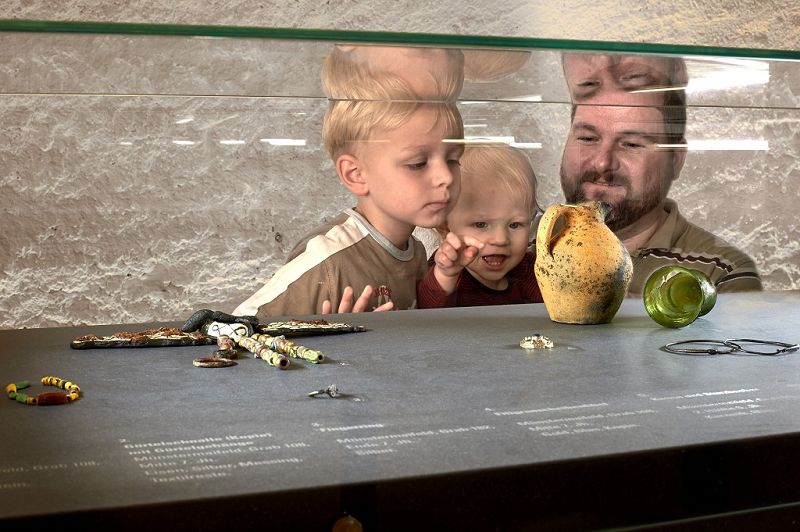 einzutauchen. Dabei gehen Sie tatsächlich in die Tiefe, denn das spannend inszenierte Museum befindet sich im Gewölbekeller der alten Propstei. In dem historischen Gebäude am Münsterplatz hat auch die Tourist-Information Maifeld ihren Sitz. Dort erhalten Sie die Eintrittskarten und weitere Informationen über das Museum und die Urlaubsregion Maifeld.
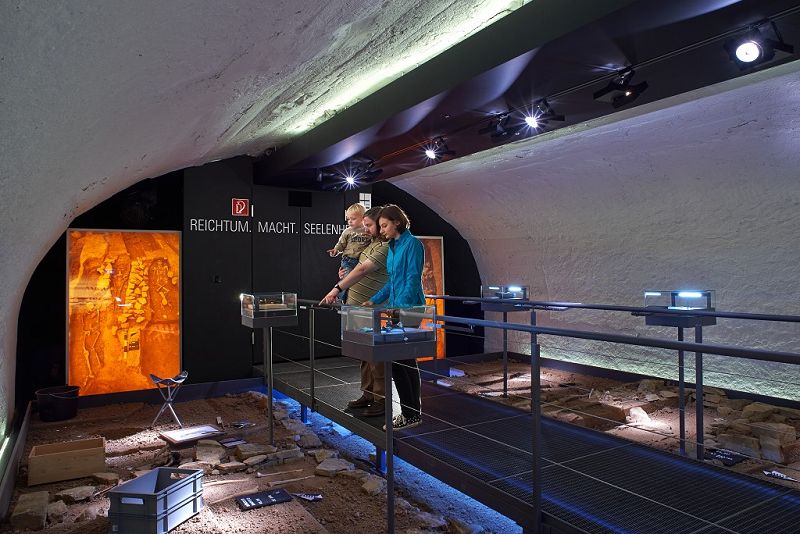 liegen Kellen, Schaufeln, Pinsel und Eimer, so als hätten die Archäologen ihre Arbeitsstätte nur kurz verlassen. Einige Skelette und Grabbeigaben wurden entsprechend der Originalfunde kopiert und so in die Gräber gelegt, wie die Archäologen sie auf dem Stiftsplatz vorfanden. Eine Multimedia-Anwendung vermittelt dem Museumsgast das spannende archäologische Ereignis der Grabung, Bergung und Restaurierung. Dabei werden auch die Ausmaße und besonderen Funde des fränkischen Gräberfeldes in Münstermaifeld verdeutlicht.
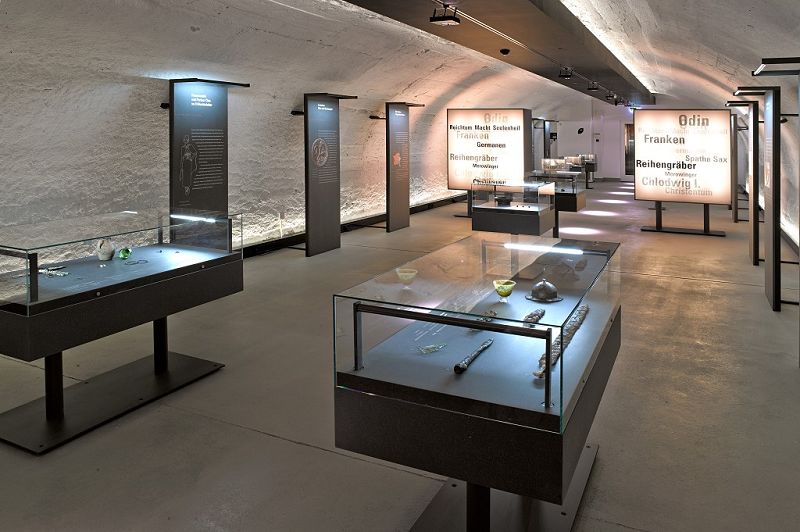 160.000 Jahre alt ist der Schädelrest eines frühen Neandertalers, der in Ochtendung gefunden wurde. Die Urnenfelder der Bronzezeit finden ebenso Darstellung wie die Hügelgräber der Kelten. Das Erscheinen der Römer brachte der Region wirtschaftlichen Aufschwung. Große Gutshöfe – sogenannte villae rusticae - entstanden, deren landwirtschaftliche Produkte die Bewohner der Städte und das Militär versorgten. Auf Luftbildern sind die Grundrisse einer solchen villa rustica in den Feldern bei Pillig noch heute gut zu erkennen. Im frühen 7. Jahrhundert drangen dann die Franken vom Rhein und der Mosel auf die Höhen der Eifel vor und besiedelten auch das Maifeld.
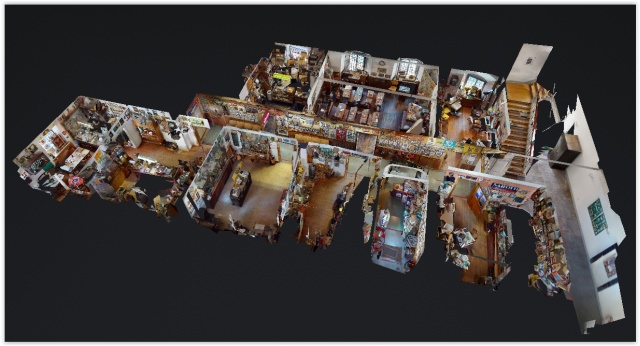
 um 1900 ist der Schwerpunkt der Sammlung Peter Weber (1921 – 2006), die der Stifter vor einigen Jahren der Stadt Münstermaifeld vermacht hat.
 In der Küche werden Kochen und Waschen um 1900 anhand etlicher Exponate anschaulich gemacht und erläutert.
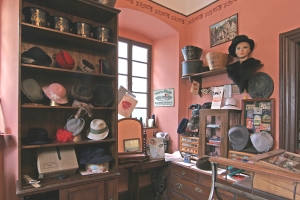 Begeben Sie sich auf eine Zeitreise in die Welt der (Ur-)Großeltern. Wandeln Sie in Deutschlands größtem Laden-Museum und entdecken Sie Dinge, mit denen Sie garantiert viele Erinnerungen verknüpfen!